Digestmeasurement
ATT opt-in rates: what still moves them
By UA Ledger staff — Archive date: 3 min read
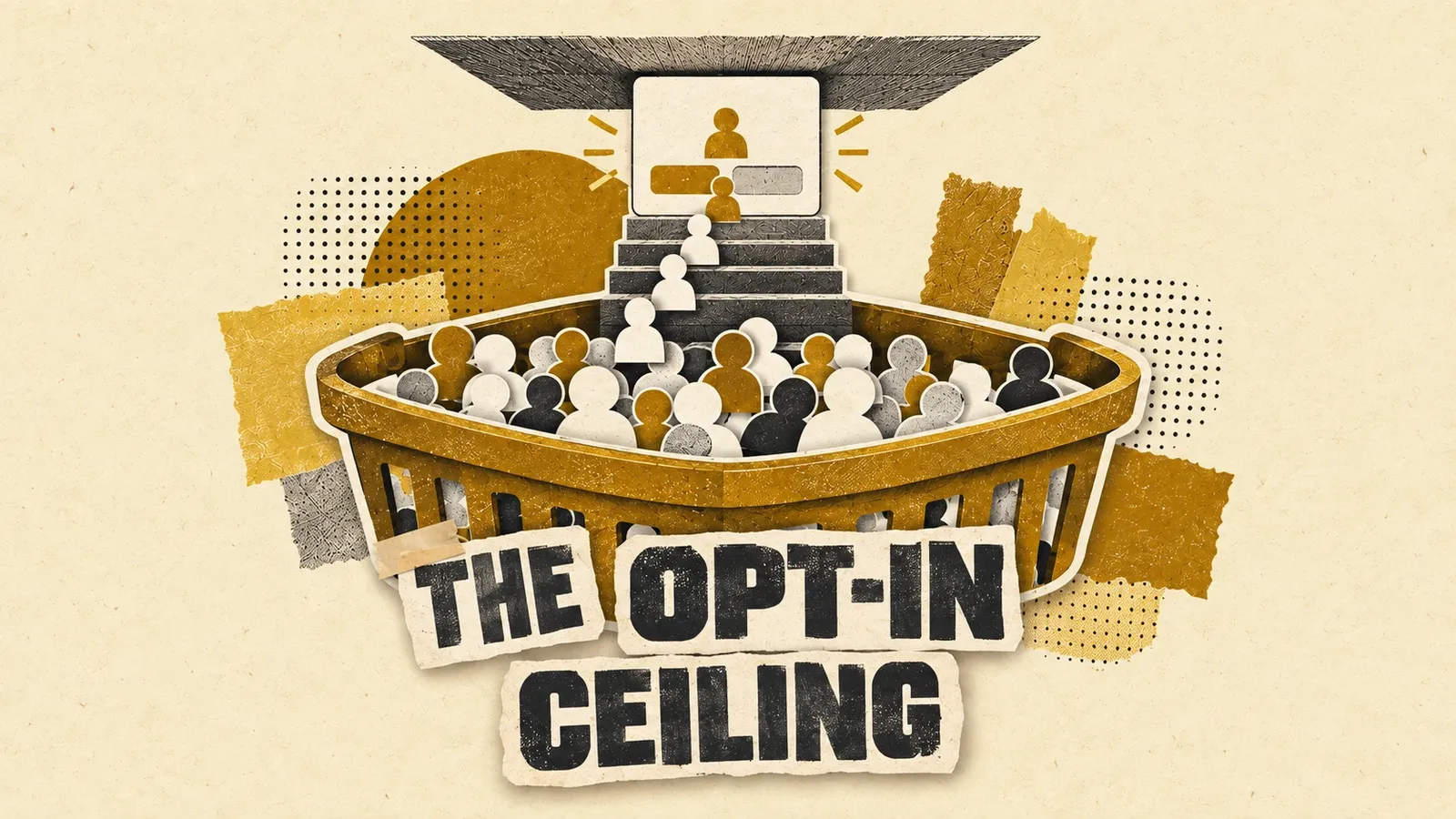
Pre-prompt design and value-first timing lifted ATT opt-in years ago. The gains have plateaued, and chasing more of them is lower value now.
Adjust's Q1 report on ATT opt-in, covered on this site in March as the paid-to-organic ratio piece, put the industry average at 39 percent, up only a point on the year before. Five months on, the figure hasn't moved meaningfully. The interventions that once produced visible gains have mostly run their course.
A pre-prompt, the screen shown before Apple's native dialog that explains why tracking helps the game, still produces the largest single lift available to a studio that hasn't built one yet; it lets a player understand the trade before an unfamiliar system dialog lands in front of them. Studios that added one in 2022 or 2023 captured most of that gain years ago, which is why further tweaking of a pre-prompt already in place moves opt-in by a point or two at best.
Where the remaining gains actually sit
Timing the prompt after a player has felt some value, meaning a completed level or a visible reward rather than first open, remains sound practice, and it still separates decent opt-in rates from poor ones. But that's a baseline now rather than a differentiator. Most competent studios prompt after value. The ones still prompting at first open are leaving opt-in on the table for a reason that has nothing to do with prompt design and everything to do with not having fixed it yet.
Genre sets a ceiling that no interface choice lifts: casual and puzzle titles, whose players skew toward a demographic more comfortable sharing device data, post opt-in rates meaningfully above hardcore and mid-core titles, and no amount of prompt polish takes a mid-core title's rate up to a casual title's level.
So the more useful question for most measurement leads by now isn't how to push opt-in a few more points. It's whether the engineering time is worth spending at all. SKAdNetwork and AdAttributionKit modelling already accounts for the unattributed majority of installs, and a studio's bidding algorithms have had years to calibrate against a market where most iOS installs arrive with no tracking consent. Opt-in gains plateaued industry-wide a while ago. The conversion value schema that has to make sense of the installs that never opt in, whatever the prompt looks like, is where the same hours pay better.
Related archive reading
These articles provide related context and remain subject to their stated review status.