Apple's ATT lawsuit: a GBP2bn UK claim over tracking
By UA Ledger staff — Archive date: 6 min read
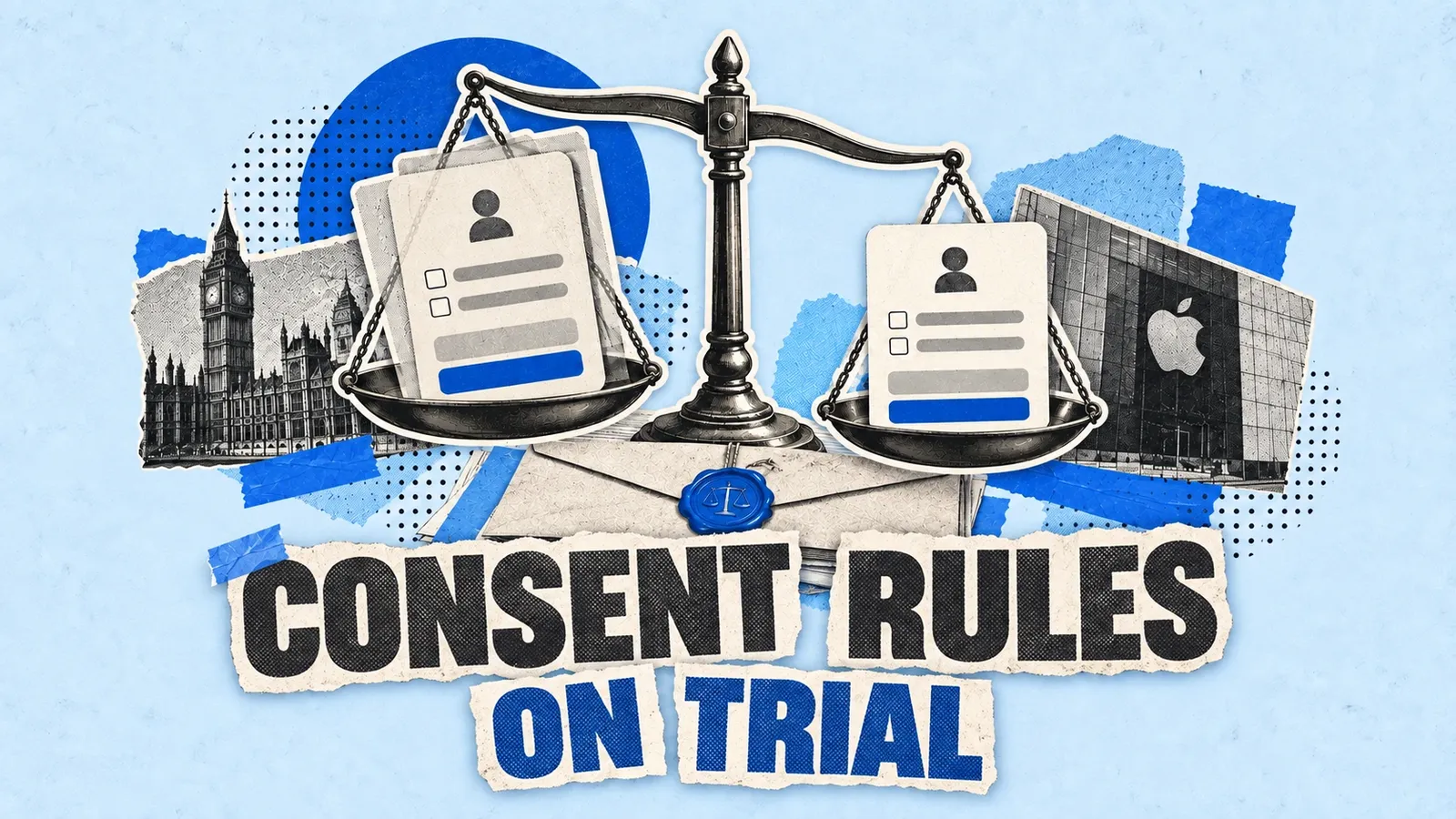
Apple's ATT lawsuit in the UK seeks GBP2bn in damages, alleging its own consent prompts were unfairly favourable versus the rules imposed on developers.
Apple's ATT lawsuit has arrived in the UK, and the number attached to it, roughly 2 billion pounds, is the largest single figure yet put against App Tracking Transparency's four-year run as the framework governing cross-app tracking on iOS. ATT Collective Action Limited filed a claim this week with the UK Competition Appeal Tribunal, arguing that Apple abused its market power and discriminated against UK iOS developers by designing and applying its own consent rules unfairly, without proper consultation, since the framework launched in 2021.
The claim's core argument will sound familiar to anyone who followed the German Bundeskartellamt's separate finding last month, which forced Apple to restructure its own consent prompt design after concluding it favoured Apple's own advertising over the version mandated for third parties. The UK claim makes a version of the same case at industry scale. Whereas third-party apps had to obtain both standard data-protection consent and a second, Apple-predefined ATT prompt, Apple applied less restrictive standards to its own advertising and data collection. It also argues that Apple never consulted developers before imposing the framework, and that the resulting drop in advertising value and rise in the cost of acquiring users caused significant, quantifiable losses across the UK app sector.
Who is bringing Apple's ATT lawsuit, and what they are saying
The claim's director, Ann Pope, previously served as senior director for antitrust at the UK's Competition and Markets Authority, a background that gives the action some regulatory credibility beyond a purely commercial dispute. "Privacy is an important protection for consumers, but it should be applied fairly and in a way that ensures businesses of all sizes can compete on a level playing field," Pope said. "It cannot become a reason for digital platforms to play by one set of rules while forcing app developers to play by another." Luke Streatfeild, a partner at law firm Hausfeld and the claim's lead solicitor, framed the case as testing "how powerful digital platforms should behave" at the intersection of privacy protection and fair competition, arguing ATT "was imposed unfairly and unilaterally, without consultation, in a manner that damaged British app developers without justification, while allowing Apple's business to flourish."
The claim runs as an opt-out collective action, meaning any UK-based developer that generated advertising revenue inside third-party iOS apps, or spent money acquiring users through advertising affected by ATT, sits inside the class automatically, with nothing to register. That structure alone makes this a materially larger claim in scope than a typical developer lawsuit, since it covers a defined population rather than a self-selected group of plaintiffs.
The wider regulatory pattern this fits
This is not the first time ATT's implementation has drawn regulatory scrutiny, and the UK claim explicitly sits inside a pattern rather than standing alone. France and Italy have both investigated the framework and imposed fines exceeding 200 million pounds combined. Poland and Romania have opened their own investigations, and so has Germany. The German case concluded in August with a mandated redesign of Apple's consent prompts rather than a fine, which hands the UK claim's lawyers a live precedent for what a remedy beyond financial damages could look like, even though this UK action asks primarily for compensation rather than a design mandate.
The commercial harm the claim points to is not abstract. Ampere Analysis senior research manager Louise Wooldridge, speaking about ATT's impact on mature mobile franchises in general, noted it "has been especially damaging for mature franchises like Angry Birds which rely more heavily on paid advertising for user acquisition," a comment made in the context of Rovio's broader business challenges rather than this specific claim, but it captures precisely the mechanism the lawsuit argues caused industry-wide losses: paid UA became structurally more expensive and less measurable once ATT constrained tracking, and that cost fell disproportionately on developers who never had Apple's alternative, less restrictive consent path available to them.
How the damages figure is likely constructed
Claims of this size in UK competition litigation typically start from an economic model of counterfactual advertising revenue, what the class would plausibly have earned absent the alleged conduct, rather than a simple sum of invoices or receipts, and nothing in the public filing details so far suggests this claim works differently. That matters for how a measurement lead should read the 2 billion pound figure. It is a claimed upper bound derived from modelling assumptions about how much cheaper and more effective UA would have been under a less asymmetric consent regime, not a number Apple has conceded owing, and UK collective actions of this scale often settle, if they settle at all, for a fraction of the amount originally claimed. The number signals scale, and it signals how confidently the claimants' economic advisors think they can quantify the underlying harm. Treating it as a likely outcome would be a mistake.
What this changes for a measurement team right now
Nothing changes operationally today. Filing is not deciding, and UK litigation of this scale typically runs for years before any judgment or settlement affects how a platform actually operates. SKAdNetwork and AdAttributionKit remain the operating reality for iOS measurement regardless of how this claim proceeds. What is worth doing now:
- The UK claim and the German remedy are separate legal tracks with different mechanisms: one seeks compensation, the other mandates a prompt redesign.
- Do not conflate them when briefing stakeholders on what has actually changed.
- If your studio generated advertising revenue in third-party iOS apps, or spent on UA affected by ATT during the relevant UK period, you are likely inside the class already without further action, worth flagging to finance and legal even at this early stage.
- Watch whether other jurisdictions treat the UK filing, or the German remedy, as a template for their own action, since a pattern across two or three major markets would carry more weight than either case alone.
The claim's real significance for now is evidentiary rather than immediate. It is the first UK legal action to put a specific, large monetary figure on ATT's asymmetry, at a moment when a separate regulator has already conceded, in a binding remedy, that the asymmetry existed. That combination gives the UK case a stronger starting position than most developer-side platform litigation manages to build on its own.
Related archive reading
These articles provide related context and remain subject to their stated review status.
Featured
Related posts
measurement
platforms
·1 min read
When to turn rewarded ads off for payers (and how to measure the loss)
measurement
platforms
·1 min read
When custom product pages need their own MMP campaign mapping
measurement
platforms
·1 min read
Season pass refund rate versus standard IAP refund rate
measurement
platforms
·1 min read
Pre-reg cohort quality vs post-launch paid cohort quality
More from the Measurement desk
measurement
platforms
·2 min read
AppLovin Ad Review drops user-level journeys for aggregate-only reporting
measurement
platforms
·2 min read
Apple adds an EU alternative ATT prompt from iOS 27.2 — mandatory in five markets
measurement
platforms
·1 min read
Pity-adjusted expected value versus player-facing banner claims
measurement
platforms
·1 min read