The UA lead as translator, not buyer
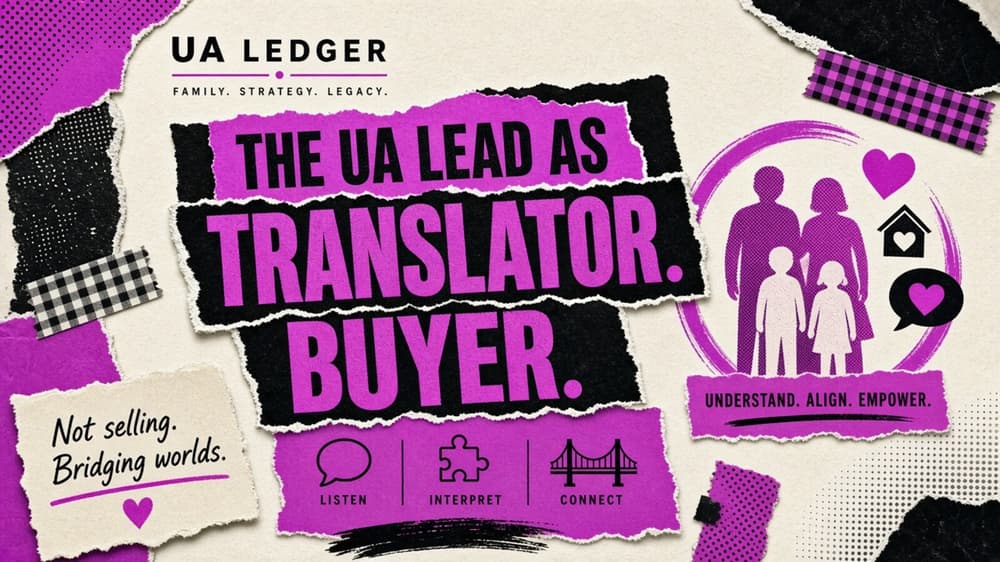
Automation has taken the buying out of the UA lead's job. What remains is translation between the game, the platform and the studio's finances.
The job title says user acquisition lead, and in most studios the person holding it stopped acquiring users some time ago. The platforms do that. Bidding runs on automation, targeting comes from inference, and a model that doesn't explain itself picks the creative that wins. What the UA lead does now (whether the org chart admits it or not) is translate: between what the game is and what the platform can sell, between what the platform reports and what finance can believe, between what the studio wants and what the market will allow.
This is a claim about what the job has become, and plenty of good UA leads will resist it because it sounds like a demotion from operator to interpreter. It's the opposite. The buying was always the mechanical part. Translation is where the studio makes or loses its money, and nobody else owns it.
What the automation actually removed
Be specific about what changed. Unity's Grow business is now mostly Vector, and its shutdown of the ironSource Ads network at the end of April removed one of the last large places where a buyer's hand on a bid mattered. AppLovin's growth over the past two years has been a story about a model, not a marketplace. Moloco sells a black box and says so. AppsFlyer's State of Gaming for Marketers 2026 report, which it published with Unity and Newzoo in January, put the top advertisers at roughly 2,400 to 2,600 creative variations a quarter, a volume no human is choosing between one at a time.
What the buyer used to do with bids and audiences, the platform now does with a target and a budget. The inputs a human still controls are the creative, the event the platform optimises toward, the target number, plus the decision to be on the platform at all. Three of those four are translation problems.
The three translations
The first is game to platform. A platform's model needs a signal that predicts value early and often, and most games don't naturally emit one. The UA lead's job is to sit with the product team and work out which in-game event, at which point in the session, is both frequent enough for the model to learn from and predictive enough to be worth learning. That conversation is about the game's design, not about media. A UA lead who can't explain why the level-eight completion event beats the first purchase as an optimisation target, in language a game designer respects, isn't doing the job.
The second is platform to finance. The platform reports a number; finance needs a different number. The gap between them, which consists of attribution windows and modelled conversions and view-through credit and the distance between reported and realised revenue, is where studios lose track of whether UA is working. The UA lead owns that reconciliation. Not the analyst, who can compute it, and not the finance partner, who cannot interpret it. The person who understands both what the platform is doing and what the studio's ledger will eventually show is the UA lead, and a lead who hands this off has handed off the job.
The third is studio to market. The studio's plan says a launch at a certain scale. The market, at the moment of launch, says what that scale will cost. The UA lead is the only person positioned to tell the studio that the plan and the market disagree, and to do it early enough to matter. Studios skip this translation more than the other two, because it means walking into a room and telling people the number they've built a year around isn't available.
The mechanism that makes this hard
Each translation crosses a boundary between teams with different incentives, and none of them trusts the translator completely. Product suspects the UA lead wants to bend the game toward what advertises well; finance suspects the UA lead is explaining away a bad number; leadership suspects the UA lead is lowering the target to make it easier to hit.
All three suspicions are sometimes right. That is why the role can't operate from a position of advocacy: a UA lead whom colleagues regard as the platform's advocate, or the creative team's, or their own team's, loses the standing to translate. The role works only when the person holding it will carry bad news in every direction, including toward their own budget.
A decision rule for the week
Here is a practical test of whether a UA lead is spending time on the right thing. Look at last week's calendar and classify each hour into three buckets: operating the platforms; translating between teams; everything else. If operating exceeds translating, something is wrong, either with the automation setup or with how the lead understands the job.
Then apply a second rule to the translating hours. Each translation should end with a decision that the team on the other side of the boundary writes down: product agrees to instrument a new event, finance agrees on a reconciliation method, leadership agrees to a revised scale. A translating conversation that ends without a decision on the other side is a briefing. Briefings are how translators become passengers.
The second-order effect
When the UA lead becomes a translator, the studio's other teams gain a shared interpreter and lose a shield. Previously, a bad quarter could go down to buying. Now a model does the buying and the translations are visible, so a bad quarter has to trace back to a bad event choice, or a bad reconciliation, or a plan the market never supported. That's more honest and more uncomfortable, and some studios will prefer the shield.
There's a cost to the individual as well. A translator's work is hard to see in a dashboard and easy to underpay. The UA lead who wants recognition for this work has to make the translations legible: a written record of what the game emits and why, a reconciliation document finance signs, a market read delivered before each planning cycle. The studio can then see the job getting done, which is the first condition of keeping it.
Consider the alternative. A UA team that keeps hiring for buying skill will spend the coming years training people to do something the platforms do faster, while the person who should have been in the room with product and finance sits watching a bid the model has already placed.
Related archive reading
Related posts

market intelligence
media buying
·1 min read
Lunar New Year UA gates from an official calendar, not a CPI myth
market intelligence
media buying
·2 min read
WeChat Mini Games upgrades 2026 IAP / virtual-payment incentives for debut titles
market intelligence
media buying
·2 min read