UA team structure by studio size
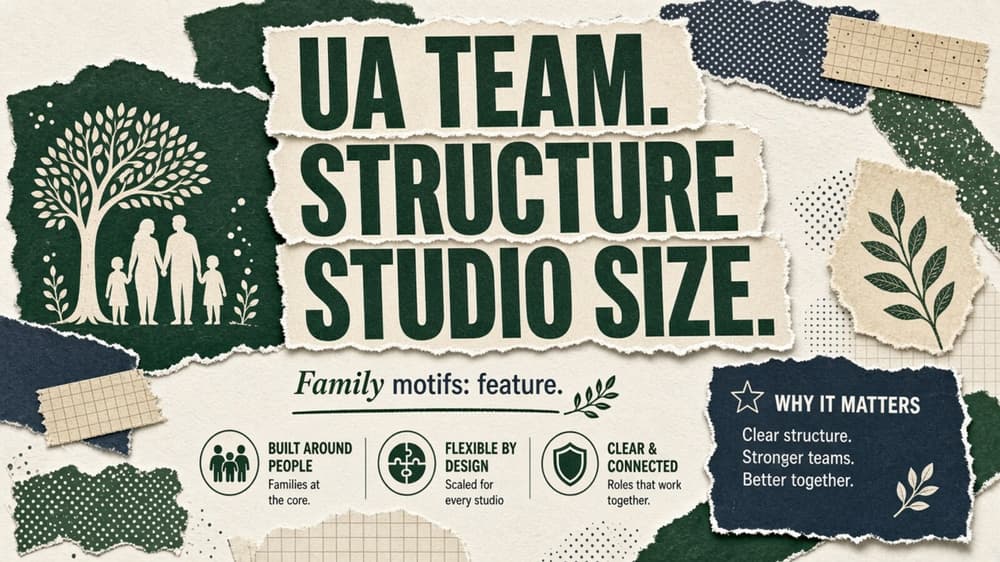
From a one-person generalist to a fifteen-person growth org, the right structure follows where a studio loses time or accuracy, not a rival chart.
UA Ledger's state of mobile game acquisition in 2026 laid out the macro picture facing buyers this year. Team structure is where that picture meets an actual hiring plan, and it's the question most studios answer by copying whatever a larger competitor's chart looks like rather than by working from their own constraints.
The one-person generalist stage
At pre-seed through early scale, one UA hire covers media buying and basic creative briefing and whatever dashboard reporting exists. Infrastructure is not in-house at this point; the stage runs on agency or network self-serve tools, with a fractional data or analytics resource borrowed from the product team standing in for a dedicated measurement hire. Hours, not skill, are the constraint. The first sign a studio has outgrown the stage is usually a backlog of creative tests that never get built rather than a spend number.
Three to five people
A dedicated buyer separates out from generalist duties first. A creative strategist or producer follows, and some kind of measurement or analytics function after that. Studios here still commonly outsource playable or video production rather than building an in-house creative studio, since the volume rarely justifies a full production team yet, and a specialist vendor can produce higher-quality output per concept than a generalist hire juggling three roles.
Eight to twelve people
Buyers typically split by channel or by title at this stage, and a dedicated creative production team forms. The first data engineer hire tends to arrive here too, owning the warehouse and MMP pipeline rather than leaving that work to a buyer's side project. Agency relationships usually shift as well, moving from a single full-service agency of record toward specialist partners: a playable production studio, a niche regional channel partner. One agency covering everything stops making sense.
Fifteen or more
At this size, distinct pods organised by title or region become common, and a measurement lead owns incrementality testing directly rather than just maintaining dashboards. Creative production moves in-house. Agencies stay on for overflow capacity and specialist formats rather than core output, while data engineering becomes a function with its own roadmap rather than a single hire absorbing every pipeline request.
Portfolio structure changes the calculus again
A studio running a single title organises around that title's channels and lifecycle stage. A portfolio of several live titles raises a different question entirely: organise buyers by channel across the whole portfolio, or by title with each pod running its own channel mix? Channel-first structures tend to build deeper platform expertise and stronger vendor relationships, since one buyer sees volume across every title on a given network. Title-first pods build faster context on a specific game's audience and creative needs, at some cost to cross-title platform expertise.
Larger portfolio publishers often run a hybrid. Channel specialists sit inside a shared services layer that title pods draw on for platform-specific execution, while the pod itself owns budget and testing priorities for its own title.
Regional staffing follows a similar path. Early-stage teams centralise everything in one location by necessity. As spend grows into markets with materially different time zones or language requirements, the first regional hire tends to be a buyer or a creative reviewer, arriving before the rest of the team scales. Market-hours coverage and local creative judgement are harder to solve remotely than most other functions on this list.
Ratios and the data engineer trigger
As a rough shape rather than a fixed rule, growth-consulting commentary tends to put one creative producer against every two to three buyers at mid-scale, with a single analytics or measurement hire supporting three to five buyers before ad hoc requests and dashboard maintenance start overwhelming that person's capacity. The trigger for the first data engineer hire is usually not a headcount milestone at all. It's pipeline fragility: the moment spreadsheet-based blending of MMP data with network and revenue numbers starts producing different totals in different weekly reviews. That inconsistency, not a target team size, is the signal worth acting on.
Agency mix follows the same logic
Smaller teams lean on full-service agencies mainly for coverage they can't yet staff themselves. Mid-size teams tend to bring core media buying in-house first, keeping agencies for channels below a spend threshold that doesn't justify a dedicated buyer. The largest teams keep agency relationships mainly for market entry into regions where they have no existing headcount, rather than for channels they already understand well.
Structure should follow where a studio is actually losing time or losing accuracy, not a template borrowed from a larger competitor's org chart. Revisit the question each planning cycle. Getting the chart right once matters less than that.
Related archive reading
Related posts

market intelligence
media buying
·1 min read
Lunar New Year UA gates from an official calendar, not a CPI myth

market intelligence
media buying
·2 min read
WeChat Mini Games upgrades 2026 IAP / virtual-payment incentives for debut titles
market intelligence
media buying
·2 min read