RPG UA lives and dies on character reveal cadence
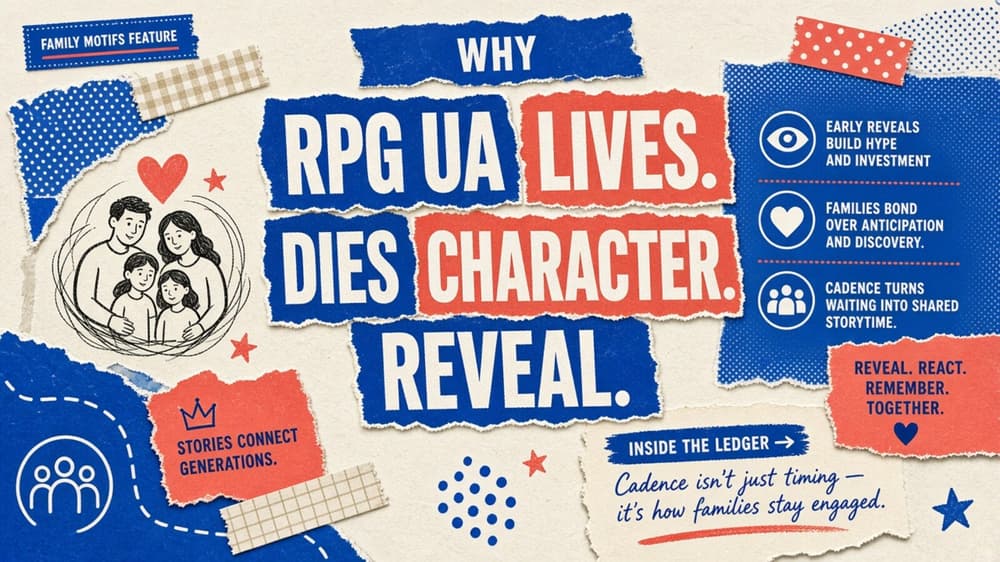
In collection RPGs the character is the purchase and the ad is the announcement. Spend should pulse with reveals, within limits.
Collection RPG teams run their acquisition as if it were always-on, smoothing spend across the month and rotating creative on a fatigue schedule borrowed from puzzle. That is the wrong model for the genre. In a character-collection game the character is the purchase, the ad is the announcement of that purchase, and demand for an install rises and collapses with the availability of the character in the ad. Spend should pulse with the reveal calendar, and the UA team should sit in the room when someone draws that calendar up. Most don't.
The always-on camp will say that pulsing wastes the learning the networks accumulate and that campaign restarts are expensive. Both are true. The cost of a restart is still small beside the cost of spending flat through a week when the game has nothing new to sell.
The character is the unit of demand
A collection RPG player installs for a reason that is more specific than most genres allow. They saw a character they want, and the character is obtainable now. The ad is not promising a general experience; it is promising a specific acquisition inside a specific window, and the player knows the window closes.
This changes what creative decay means. In puzzle, an ad fatigues because the audience has seen it. In a collection RPG, an ad fatigues because the banner rotated. The same video that converted well in the reveal week converts poorly a fortnight later, not because viewers have tired of it but because it now advertises something the game no longer offers. Teams that read this as creative fatigue and respond with new variants of the same character are spending production budget to fix a calendar problem.
The corollary is that the reveal count sets the ceiling on creative variety. A game that reveals two characters a month has two genuine hooks a month, however many variants each one gets. UA Ledger's January piece on sustaining a live franchise past year ten made the point that long-running games are content businesses first; in collection RPGs the content unit and the acquisition unit are the same object.
The mechanism: pre-announcement, reveal, tail
Demand for a character follows a shape that is consistent enough to plan around. Interest builds from the tease, peaks in the days after the banner opens, and decays through the banner's life as the players who wanted it have either pulled or decided against it.
Acquisition spend that ignores this shape overspends in the tail and underspends at the peak. Spend that follows it concentrates budget where install intent runs highest and steps back when the game's argument is weakest.
As an illustrative example only, a shape that has worked in review meetings for a game on a fortnightly banner cycle: around a fifth of the cycle's budget in the tease window before the banner opens, half in the first five days after it opens, and the remaining third across the tail, tapering to a floor. The floor is what keeps the network models warm; it is not where the installs come from.
The second-order effect: cadence trains the player to wait
Now the trade-off that reveal-driven marketing creates and that most coverage of the genre misses. Every reveal teaches the player something about how often reveals happen. A team under pressure to feed UA with fresh hooks will shorten the cadence, and a shorter cadence carries two costs that arrive later than the benefit.
The first lands on the production side. Art, animation, voice, kit design, balance: all of it sits on the critical path, and a cadence dictated by the marketing calendar rather than the production calendar produces either thinner characters or a burnt-out team.
The second lands on the player side, and it is more subtle. A player who has learned that a new, better character arrives every ten days learns to skip. They save currency, they wait for the reveal after this one, and their first purchase moves from the character they installed for to some future character they have not seen yet. First-purchase conversion falls even as install intent rises, because the cadence that made the ad work made the purchase optional. The UA dashboard reports success. The monetisation dashboard reports a growing population of savers.
The correction is a cadence slow enough that skipping has a real cost, paired with reveals distinct enough that each one attracts a different segment of the audience rather than upgrading the same one.
A decision rule for the calendar
The UA team should hold a seat on the content calendar with three questions to ask of every planned reveal. The first: who does this character recruit that the previous three did not? If the answer is nobody, the reveal is a retention event, not an acquisition event, and should carry a smaller spend pulse. The other two:
- Is the tease window long enough to build a pre-launch audience on the networks before the banner opens? Two to three days is usually too short to matter; a week is usually enough.
- What is the evergreen argument for the game in the tail of this cycle? Roster breadth, story, a mode. Something has to carry the floor spend when the featured character is no longer the reason to install.
That last question is the one most often left unanswered. A team with no evergreen hook has nothing to run between reveals except stale character ads, which is how the always-on habit forms in the first place.
Who owns the calendar
The reveal calendar is the single most consequential UA document in a collection RPG, and in most studios the UA lead first sees it once it is already locked. The change worth making this quarter is procedural rather than creative: attach an acquisition forecast to each planned reveal before anyone schedules that reveal, so the argument about cadence happens with both costs on the table.
The tell that the calendar is running too fast is not in the CPI. It sits in the share of new players who reach their first banner with enough saved currency to pull and choose not to. When that share climbs across three cycles, the cadence has become the problem, and no amount of creative will fix it.
Related archive reading
Related posts
market intelligence
media buying
·1 min read
Lunar New Year UA gates from an official calendar, not a CPI myth
market intelligence
media buying
·2 min read
WeChat Mini Games upgrades 2026 IAP / virtual-payment incentives for debut titles
market intelligence
media buying
·2 min read